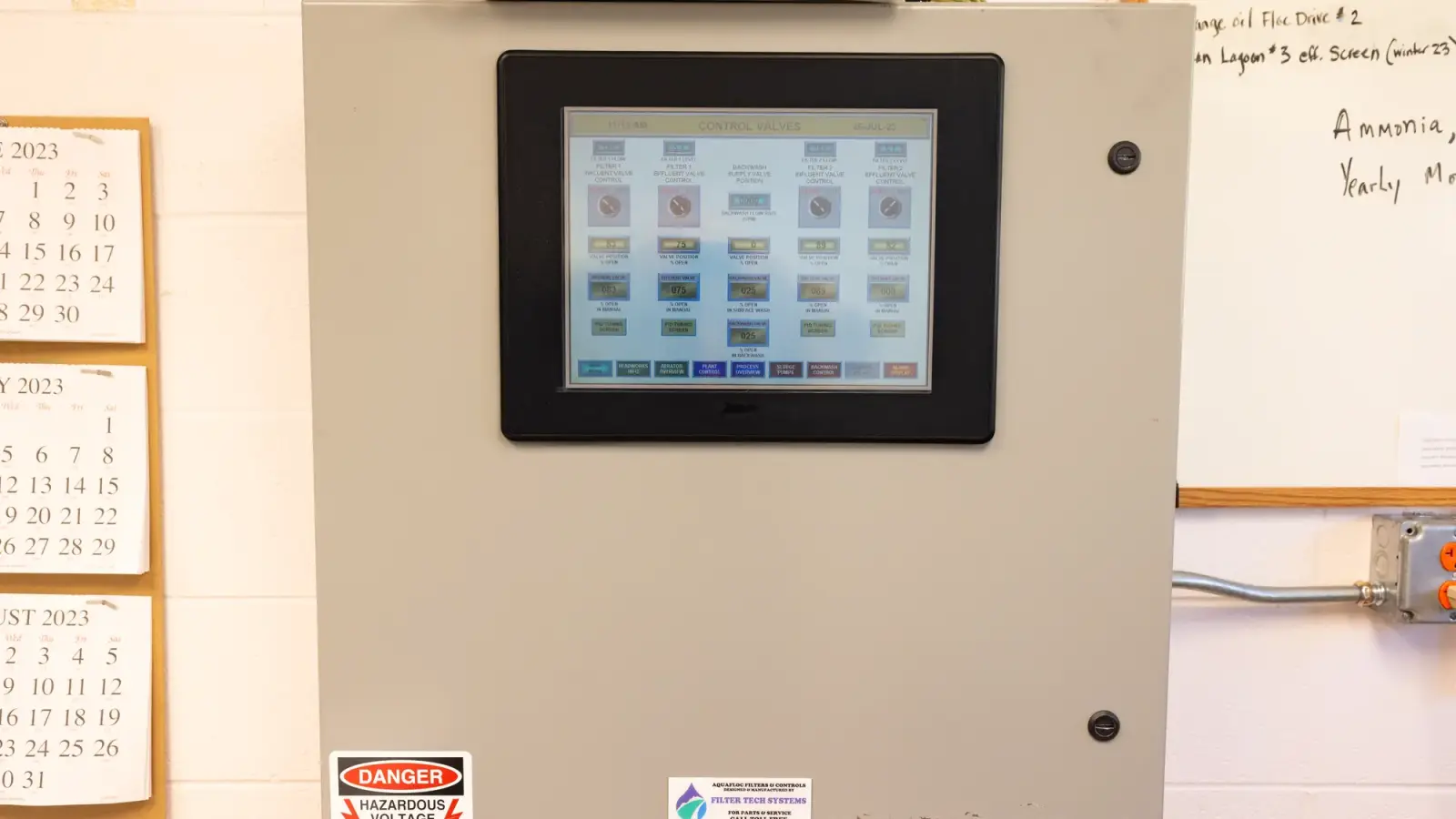
An Oregon state official says a cyberattack temporarily disrupted the operational technology of a drinking-water provider in late July. Beyond that attributed statement, the public picture is remarkably sparse.
Oregon Enterprise Information Services spokesperson Michael Hanna-Butros Meyering disclosed the incident to The Source. He did not name the provider, locate it, identify the affected equipment, describe the disruption or say how long it lasted. He cited an investigation led by the FBI and the Cybersecurity and Infrastructure Security Agency as the reason for withholding detail.
Bend IT director Adam Young told the paper that his city’s systems were not compromised. The Source reports the same outcome for Redmond, but does not name the Redmond official behind that information. Young described safeguards that separate Bend’s critical infrastructure from the city’s business network and public internet, along with the ability to operate water and wastewater facilities manually. Those are meaningful protections. They are not proof that an isolated system cannot be breached.
Operational technology is where software meets water
The phrase “operational technology,” or OT, distinguishes this incident from an ordinary office-network breach. The US Environmental Protection Agency defines OT as the hardware and software used to monitor or control physical devices and processes.
In a water system, that can include intake, treatment, pumps, storage, distribution and the instruments that report conditions to operators. Supervisory control and data acquisition systems—usually called SCADA—can bring readings and controls together on screens such as the one in the featured photograph. Programmable logic controllers and remote terminal units may carry out instructions closer to the equipment.
Access to OT therefore matters even when customer records are untouched. A disruption can reduce visibility, interrupt automated control or force staff to fall back on local and manual procedures. But “accessed operational technology” does not tell us which of those consequences occurred in Oregon. The available statement does not say that an attacker changed treatment chemistry, operated a pump or valve, contaminated water or stopped service.
That gap is more than semantic. A malicious login to an exposed interface, a loss of monitoring and an attacker taking control of a physical process are different events with different public-safety implications. The Oregon case cannot yet be placed on that spectrum from the information released.
Timing does not establish who was responsible
The Oregon disclosure followed reports of attacks on municipal water systems in several states. In Minnesota, more than 30 systems were targeted on July 26 and 27, according to Minnesota IT Services information reported by the Associated Press. One facility in Braham temporarily lost its plant and well, while Plymouth maintained operations. Both reported no water-quality impact.
Those incidents provide context for the timing, not attribution for Oregon. Meyering said the state had not established who was responsible or whether its incident was connected to attacks elsewhere. Federal and state officials had also not publicly confirmed attribution for the Minnesota activity when the AP reported it on July 30.
Claims tying the events to Iran remain especially unsupported. Similar targets or methods can suggest an investigative hypothesis, but they do not establish a common operator. Attackers also scan public-facing systems at scale, so separate intrusions can cluster around the same vulnerability without being a single coordinated campaign.
Why Bend emphasizes separation and manual control
Bend IT director Adam Young told The Source that the city’s infrastructure systems are not internet-facing and that systems supporting critical infrastructure are isolated from both the business network and the public internet. He also said the freshwater and wastewater facilities could continue operating manually if a cyberattack affected OT.
These controls address two different problems. Network separation reduces the number of routes an outside attacker can use. Manual operation gives staff a way to maintain essential processes when automation or central monitoring is unavailable. Incident-response planning, employee training, third-party assessments and round-the-clock detection add further layers.
No single layer makes a facility immune. EPA guidance specifically cautions that even nominally air-gapped OT can remain vulnerable. Isolation works best as part of a system that also maintains an accurate asset inventory, strong authentication, patching, monitoring and rehearsed recovery procedures.
Young said Bend receives daily attempts involving phishing, social engineering, malware and other methods. The Source also reports that Redmond repels thousands of attempts a day. Those numbers should not be read as thousands of successful intrusions. Internet-connected organisations routinely receive automated scans, spam and blocked probes; the security question is which attempts reach a vulnerable system and whether defenders can detect and contain them.
Water cybersecurity is uneven by design
The national water sector is difficult to secure uniformly. It includes large city utilities with dedicated teams and small providers with limited staff, old control equipment and competing demands for capital. A 2026 Government Accountability Office report described persistent threats, uneven capacity and gaps in federal cybersecurity requirements for wastewater and some drinking-water systems.
EPA said it identified vulnerabilities at 277 water systems during 2025 and helped remediate 350 vulnerabilities. Those figures do not mean 277 utilities were breached. They show how often preventable exposure—such as internet-facing equipment, weak authentication or incomplete inventories—can be found before an incident.
Oregon Health Authority guidance tells drinking-water providers to report loss of control or monitoring, unauthorised access to critical systems, and effects on infrastructure or public health. It recommends risk assessments, updated software and passwords, firewalls, multifactor authentication, training and incident plans. The checklist is conventional because resilience is usually built from multiple ordinary controls rather than one exceptional product.
Disclosure must eventually become evidence
Protecting an active investigation can justify withholding a utility’s name or technical details in the first days after an attack. Publishing too much can also expose recovery work or reveal weaknesses to other attackers.
Yet a permanently anonymous account would leave utilities and the public with little to learn. When the immediate risk passes, a useful after-action report would distinguish initial access from operational effect, explain whether service or quality changed, identify the failed and successful safeguards, and state what other providers should check.
For now, the responsible conclusion is narrow. An Oregon EIS spokesperson says the state recorded a temporary OT disruption at a drinking-water provider. Bend’s IT director said Bend avoided compromise, while The Source reports that Redmond did too. The reported disruption warrants attention, but the evidence released so far does not support a story about poisoned water, Iranian control or a statewide systems failure.