Opening a glove compartment usually reveals registration papers, cables and the things a driver forgot were there. In Queensland, one driver instead found a python coiled inside.
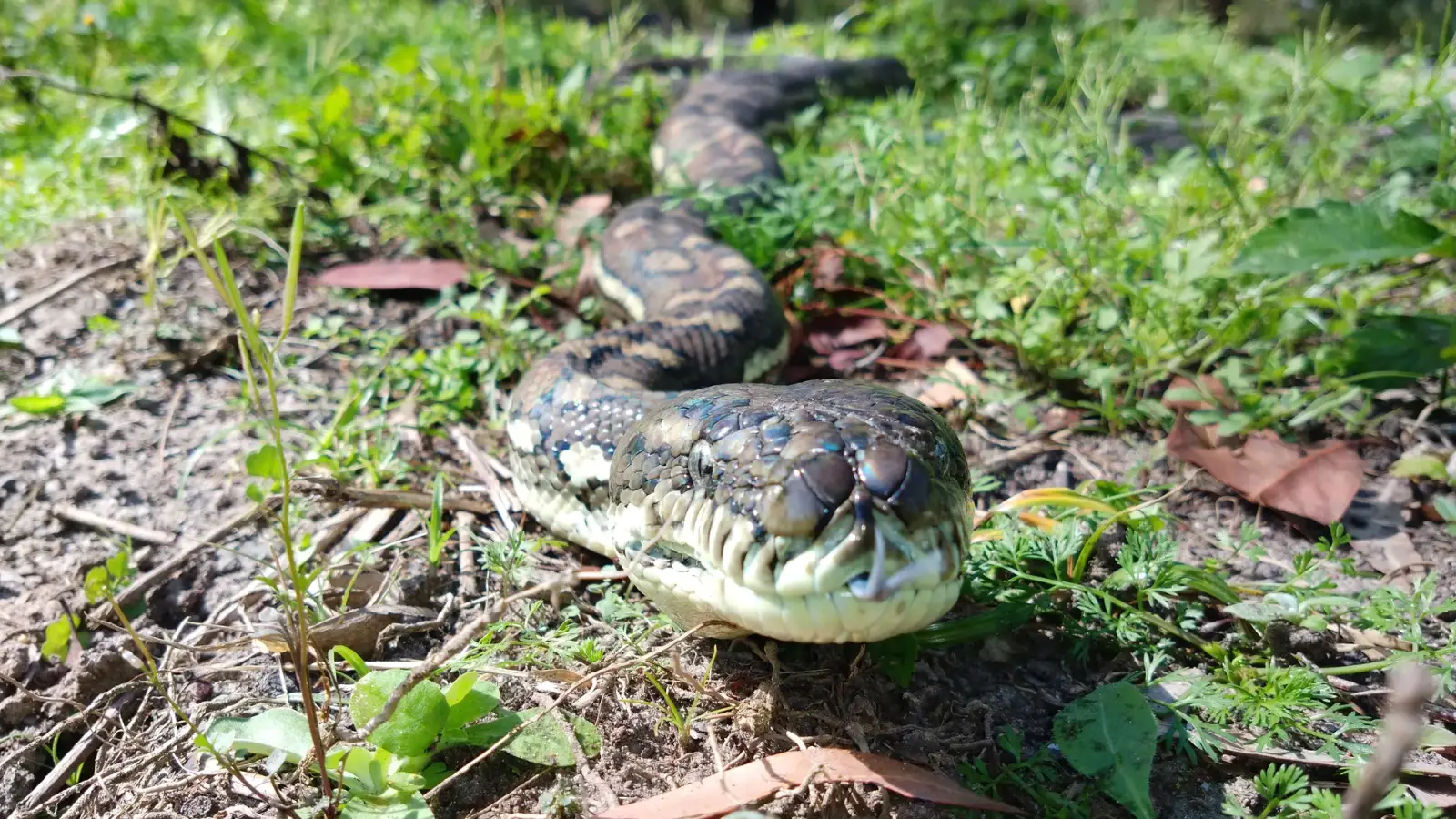
UPI reported on August 5 that a catcher named Summer removed the snake from the vehicle. A video posted by Sunshine Coast Snake Catchers 24/7 identified it as a coastal carpet python. The catcher noticed a small injury and took it to a wildlife hospital.
That brief account leaves many tempting questions unanswered. It does not say how the python entered, how long it had been there, where in Queensland the car was parked, how serious the injury was or what happened after admission. What the incident does show clearly is the value of a calm response: even when a snake is not venomous, a confined vehicle is a poor place to attempt an untrained capture.
A sheltered space fits the species—but proves little
Queensland’s environment department describes carpet pythons, Morelia spilota, as secretive ambush predators whose patterned skin provides camouflage. They occupy habitats ranging from rainforest to dry woodland and may shelter in tree hollows, logs, rocky crevices, roofs and sheds.
A dark compartment inside a car is therefore not wholly inconsistent with the sort of enclosed refuge a python can use. Summer remarked in the removal video that the animal appeared cosy and warm. Neither point establishes why this particular snake was there. It may have sought shelter, followed access from another part of the vehicle or simply remained after entering by an unknown route.
The distinction matters because animal behaviour is easy to turn into a neat story after the fact. “It entered for warmth” sounds plausible, but no reported temperature, observation of entry or examination of the car tests that idea. The available evidence begins when the glove compartment was opened.
Nor can the injury fill the gap. UPI reports only that it was small. There is no diagnosis and no evidence that the compartment or vehicle caused it. Taking the animal to a wildlife hospital was a precaution documented in the account, not proof of a collision or entrapment.
Non-venomous does not mean suitable for handling
Carpet pythons kill prey by constriction rather than venom. The Queensland species account says most do not exceed 2.5 metres, though individuals can reach 4 metres. Those are general figures, not a measurement of the glove-box snake, which UPI calls “large” without giving a length.
For a driver deciding what to do, exact species and size are secondary. The Queensland government warns that snakes can be difficult to identify and advises people to back away and give any snake an escape route. If one needs to be removed, the recommended step is to contact an authorised snake catcher.
That advice protects both sides of the encounter. Reaching into a confined space puts hands close to an animal whose movements are restricted and whose behaviour may be defensive. It also creates a risk of hurting a protected wild animal during an improvised removal. A catcher can control the scene, assess the snake and arrange veterinary care when an injury is visible.
In Queensland, snake removal is regulated rather than treated as an informal service. Native snakes are protected wildlife. The state says killing, injuring or taking one from the wild is an offence, and people who remove and relocate protected animals under a damage-mitigation permit must meet training requirements. For reptile work, applicants must document relevant handling training and first-aid certification.
What to do before moving the car
The safest response begins by stopping the encounter from becoming more complicated. Do not reach into the compartment, prod the snake or attempt to test whether an identification is correct. Move other people and pets away, keep a safe distance and call a licensed catcher.
The Queensland government also advises keeping a snake in view from a safe distance when practical, because that can help a catcher locate it. Inside a vehicle, however, closing doors, opening panels or starting the car could alter where the animal can move. Instructions from the catcher should take priority over a generic rule, especially when nobody knows whether the snake has moved beyond the compartment.
If a bite occurs, the response changes from wildlife removal to first aid. Queensland advises treating every snakebite as a medical emergency and calling Triple Zero. A person should not rely on their own visual identification of a non-venomous species to dismiss a bite.
A surprising encounter, handled in an ordinary way
The location makes the story unusual. The response did not need to be. The driver did not have to decide whether a close-up identification was reliable, work out how to grip a python or determine the cause of its injury. According to the video summarized by UPI, a trained catcher removed it and transferred it for treatment.
That is the useful lesson in an otherwise peculiar callout. Knowing that carpet pythons are non-venomous supplies context, but it is not an invitation to handle one. Where people, vehicles and protected wildlife meet at close quarters, uncertainty is itself a reason to step back.